
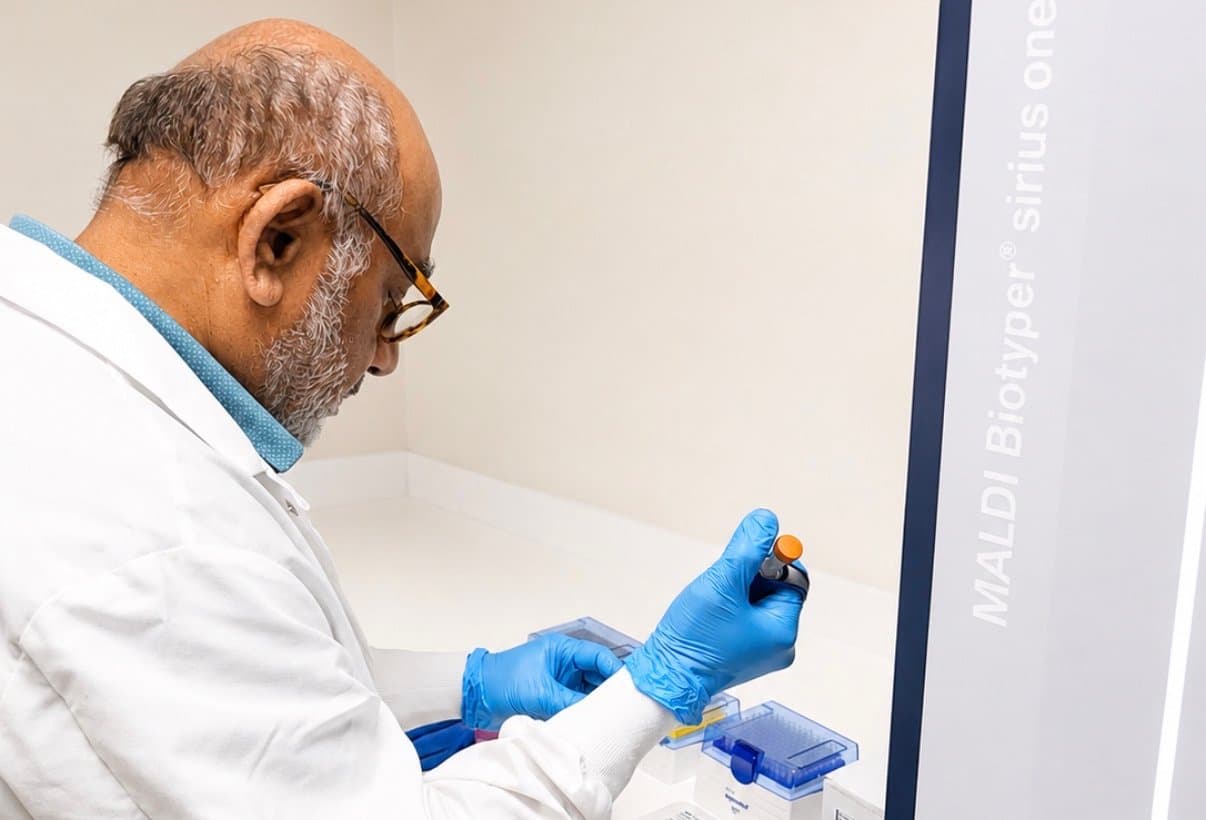
Bacteria & Yeast Speciation
Species-Level ID for Bacteria and Yeasts.
Full-service bacteria and yeast speciation on the Bruker MALDI Biotyper. Rapid, accurate identification of organisms, including Legionella, to support environmental monitoring, cleanroom investigations, and contamination control.
The Instrument
Identification by Protein Fingerprint, Not Guesswork
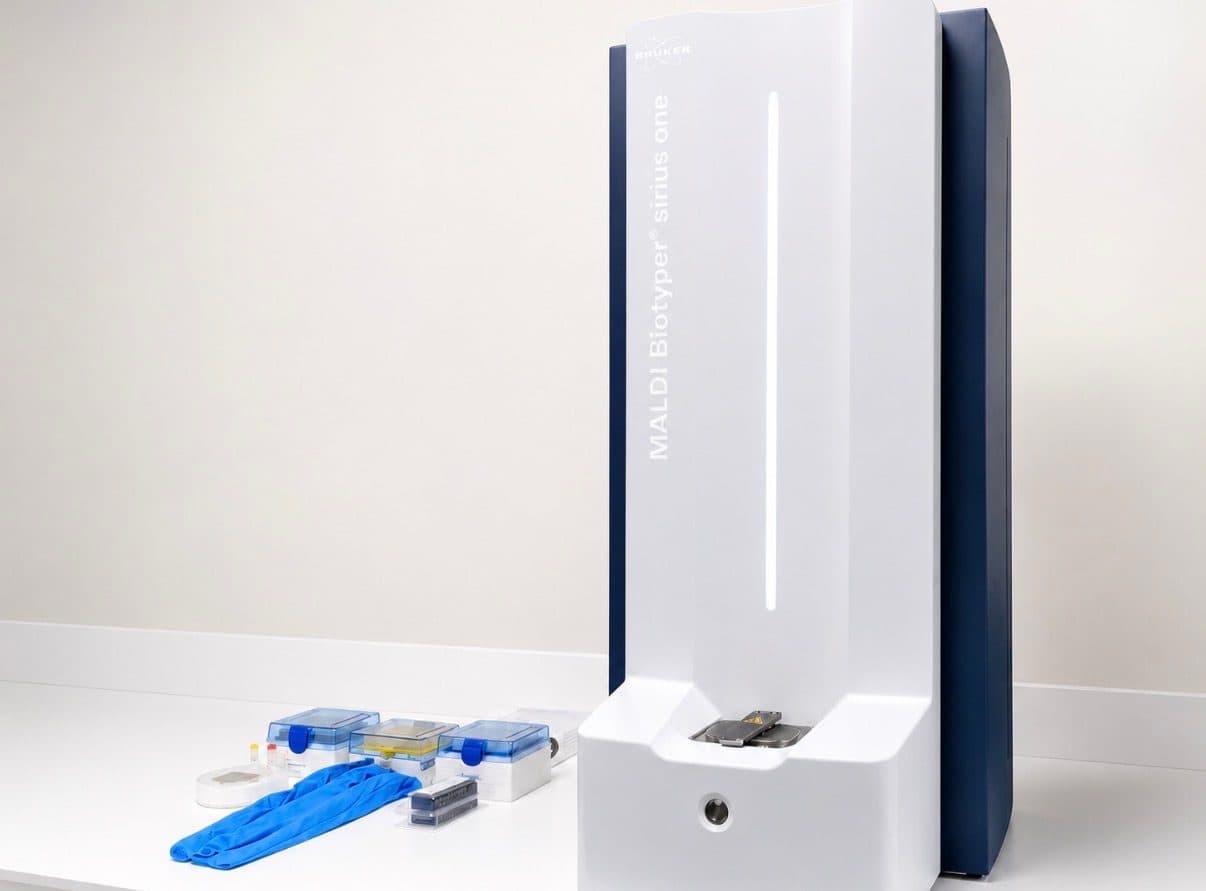
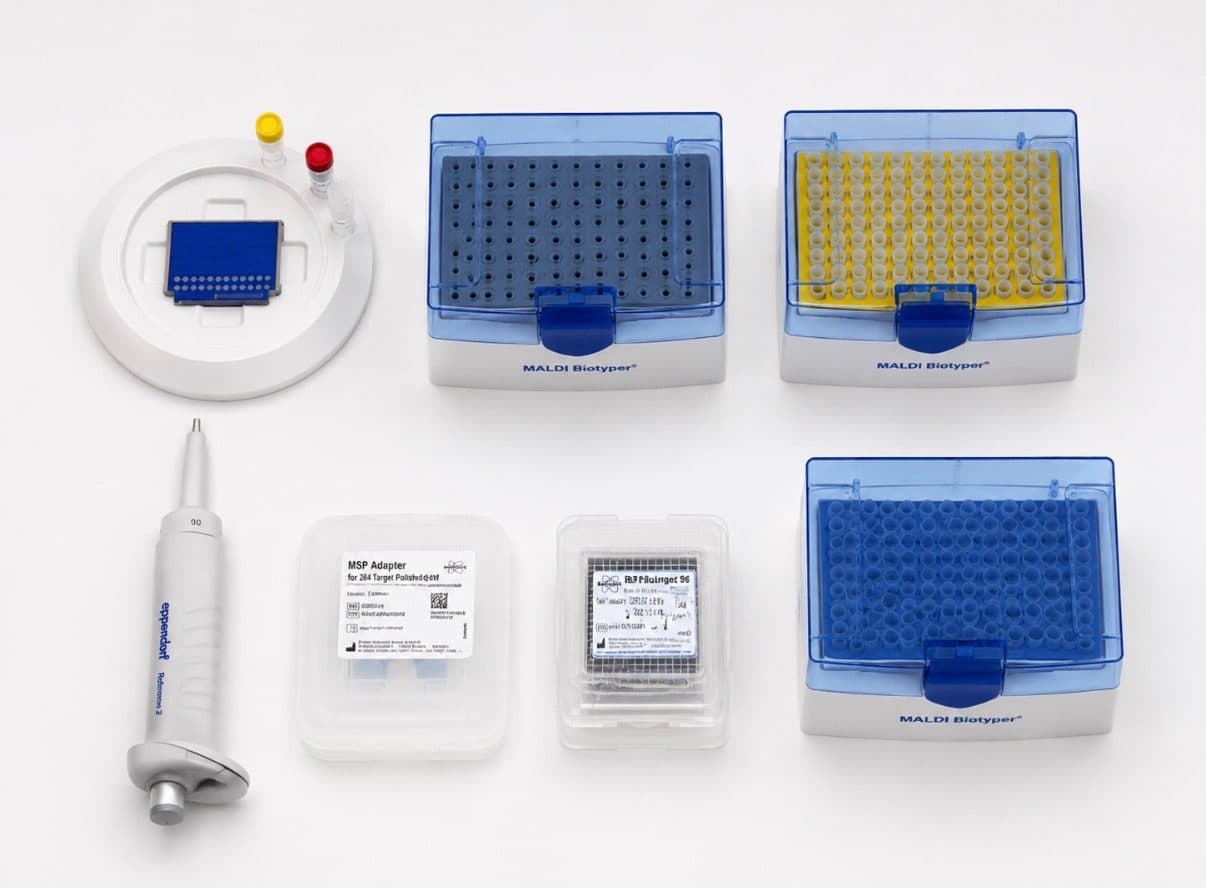
Our lab runs the Bruker MALDI Biotyper sirius one, a mass spectrometry platform that identifies microorganisms by their unique protein signature. Instead of relying solely on slow biochemical panels, the Biotyper reads the molecular fingerprint of an isolate and matches it against a curated reference library.
The result is a confident, species-level identification of bacteria and yeasts, delivered quickly enough to keep a cleanroom investigation or water-management decision moving.
What MALDI-TOF Brings
Speed and Accuracy in One Step
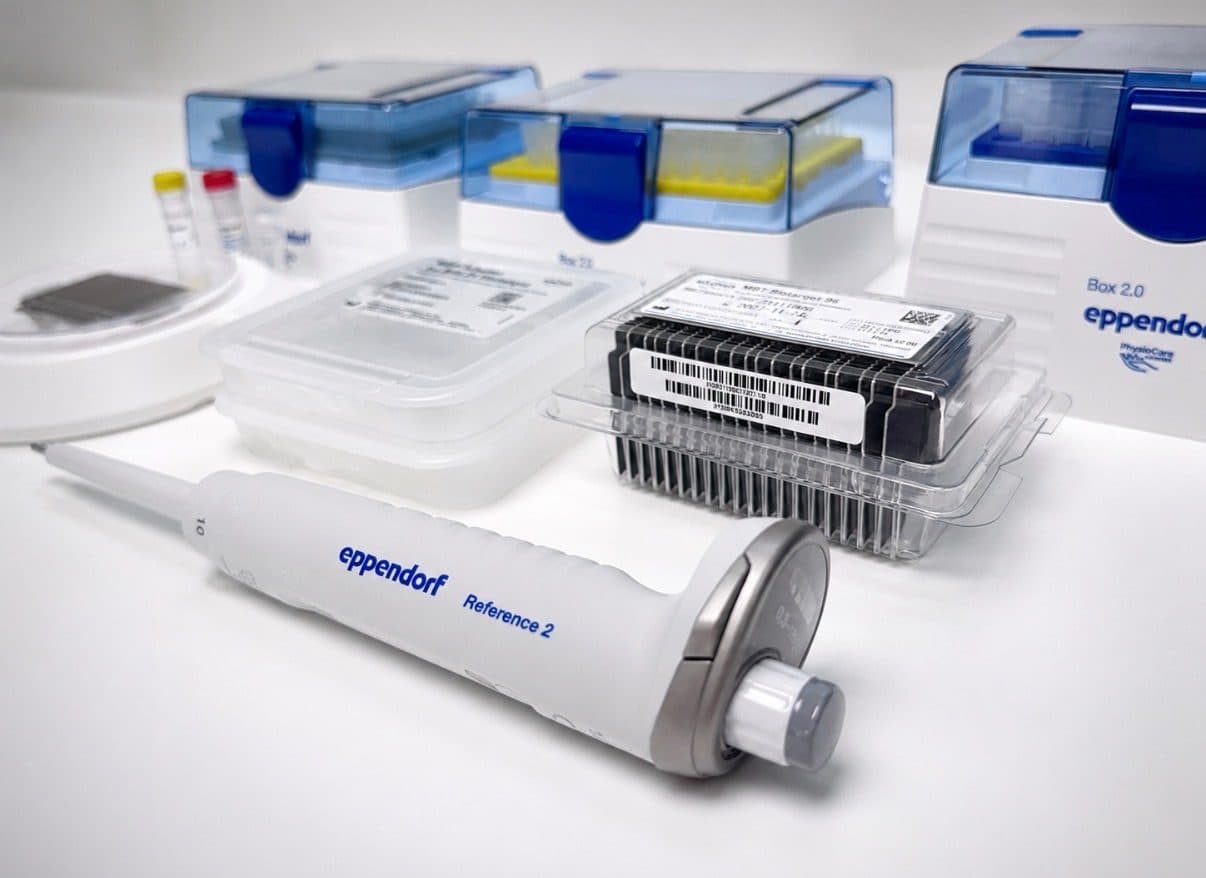
MALDI-TOF stands for Matrix-Assisted Laser Desorption/Ionization Time-of-Flight mass spectrometry. Once an organism is isolated, the analysis itself takes minutes, and it resolves identifications that older methods can leave ambiguous.
That combination of speed and specificity is why it has become a reference method for microbial identification across environmental, pharmaceutical, and water-safety programs.
- Species-level identification, not just a genus or a count
- Rapid turnaround once an isolate is in hand
- Broad coverage across bacteria and yeasts
- Reproducible results backed by a curated reference library
What We Identify
If it can be cultured and isolated, the Biotyper can usually put a name to it. Common requests include:
Gram-Positive & Gram-Negative Bacteria
Species-level identification across a broad range of environmental and clinical-adjacent organisms, including isolates recovered from water, surfaces, and air samples.
Legionella Speciation
Confirms Legionella isolates to the species level in a fraction of the time of traditional methods, often paired with CDC culture for outbreak forensics and water-management programs.
Yeasts & Yeast-Like Fungi
Identification of Candida, Cryptococcus, and other yeasts that drive contamination events in compounding pharmacies, cleanrooms, and built environments.
Environmental Isolates
Characterization of unknown colonies pulled from monitoring plates, swabs, and bioburden screens, turning a count into a name you can act on.
How Speciation Works
Isolate the Organism
Bacterial or yeast colonies are cultured and isolated from your submitted sample.
Prepare the Target
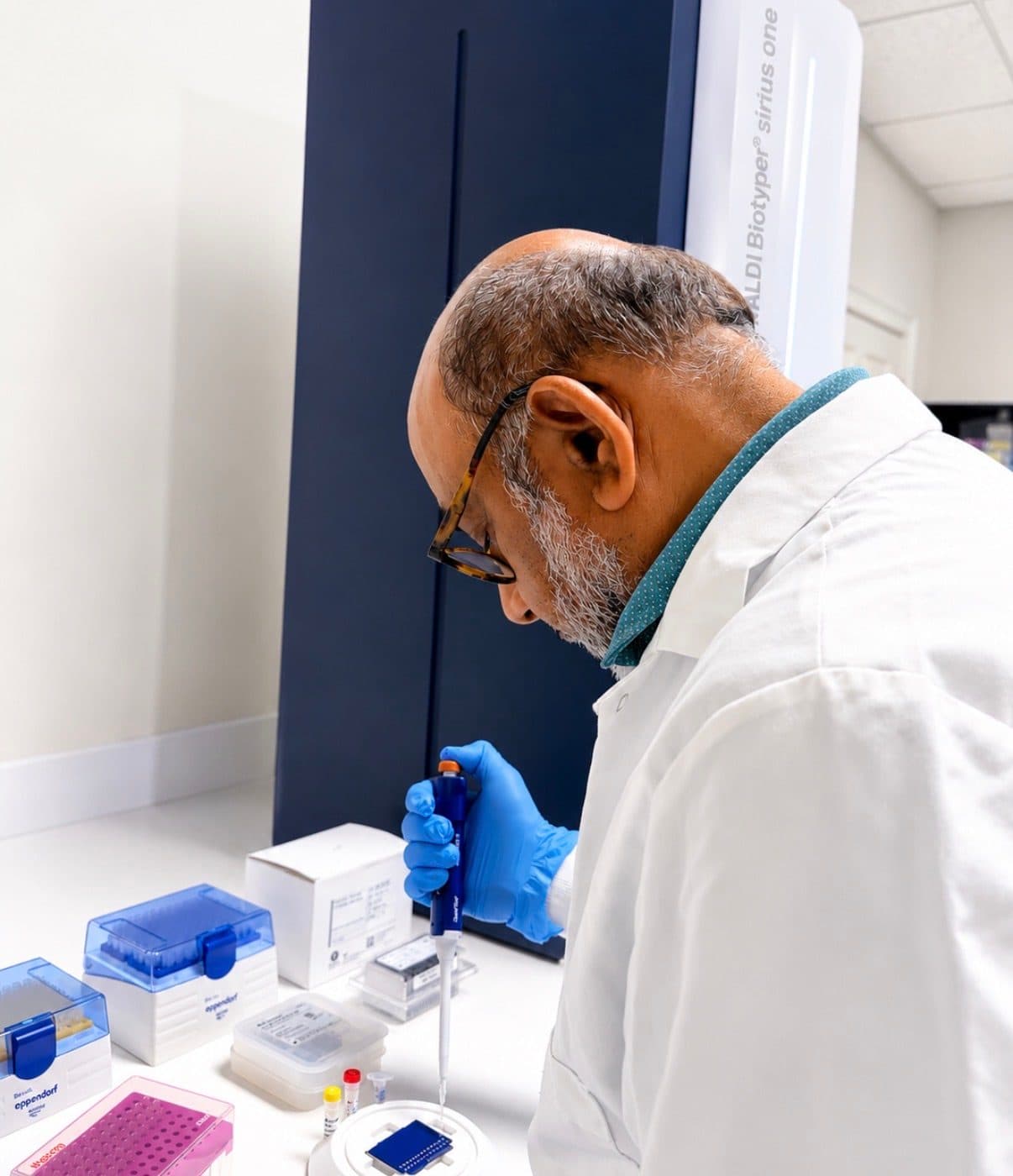
A small amount of the isolate is spotted onto a target plate and overlaid with a matrix that co-crystallizes with the cells.
Acquire the Spectrum
A laser pulse ionizes the sample. The Biotyper measures the protein mass fingerprint by time-of-flight, unique to each species.
Match and Report
The spectrum is matched against a curated reference library to deliver a confident species-level identification, with a score you can interpret.
Rapid
Identification in minutes once an organism is isolated.
Species-Level
Resolves to the species, not just the genus or a colony count.
Broad Coverage
Bacteria and yeasts across environmental and facility programs.
Where Speciation Helps
A name on an isolate changes what you can do next. Common use cases our professional and facility clients bring to us:
Environmental Monitoring
Identify the organisms behind viable counts on air and surface samples, so a trend in your monitoring program becomes an actionable finding rather than a number.
USP <797> and <800> Investigations
When a cleanroom action level is exceeded, regulators expect identification of the recovered organism. MALDI speciation closes that gap quickly for sterile compounding programs.
Contamination Control
Trace recurring contaminants in manufacturing, water systems, and controlled environments back to a specific species to support root-cause investigations.
General Microbiology Workflows
A rapid, reliable identification step for environmental, water-treatment, food, and research clients who need a name attached to an isolate.
Why Air Allergen
An Accredited Lab That Speaks Compliance
Speciation is only useful if the report holds up. Our work runs through an ISO/IEC 17025:2017 accredited lab with documented methods, chain of custody, and a team that understands how environmental and cleanroom programs actually use the result.
- ISO/IEC 17025:2017 accredited lab with established sample-shipping protocols
- Independent, third-party analysis with no remediation conflict of interest
- Pairs with culture and Legionella workflows for outbreak and source tracking
- Reports formatted for USP <797>/<800> and water-management programs
- Direct access to microbiologists when a result needs interpretation
Who We Support
Have an Isolate or an Investigation in Motion?
Call us before you ship. We will confirm sample requirements, advise on whether to pair speciation with culture, and align priority intake when a cleanroom or water-system investigation is time sensitive.
Our microbiology team is ready to scope the right workflow with you.
Call 770-938-4861Where We Run Speciation
Ship isolates or coordinate field collection across the Southeast. Analysis is performed at our ISO/IEC 17025:2017 accredited facility in Atlanta.
- TN
Tennessee
- NC
North Carolina
- SC
South Carolina
- AL
Alabama
- GA
Georgia
Lab HQ. Atlanta
5
States served
ISO 17025:2017
Accredited lab
Same-day
Reporting available
Put a Name to What You Are Finding
From routine environmental monitoring to a time-critical cleanroom investigation, our team will align the right speciation workflow before your sample arrives.
Request Lab Service
For hospitals, pharmacies, and commercial facilities